Built to Exact Specifications
Permanent Mold Aluminum Castings: Precision Parts for Industrial Applications
Aluminum castings produced through permanent mold processes fulfill an essential purpose in the manufacturing of precision components for numerous industries. These castings use reusable molds, resulting in exceptional accuracy and surface quality. As the demand for high-performance parts rises, understanding the nuances of this manufacturing process becomes essential. The advantages and applications of aluminum permanent mold castings warrant further exploration, revealing their significance in modern industrial practices.
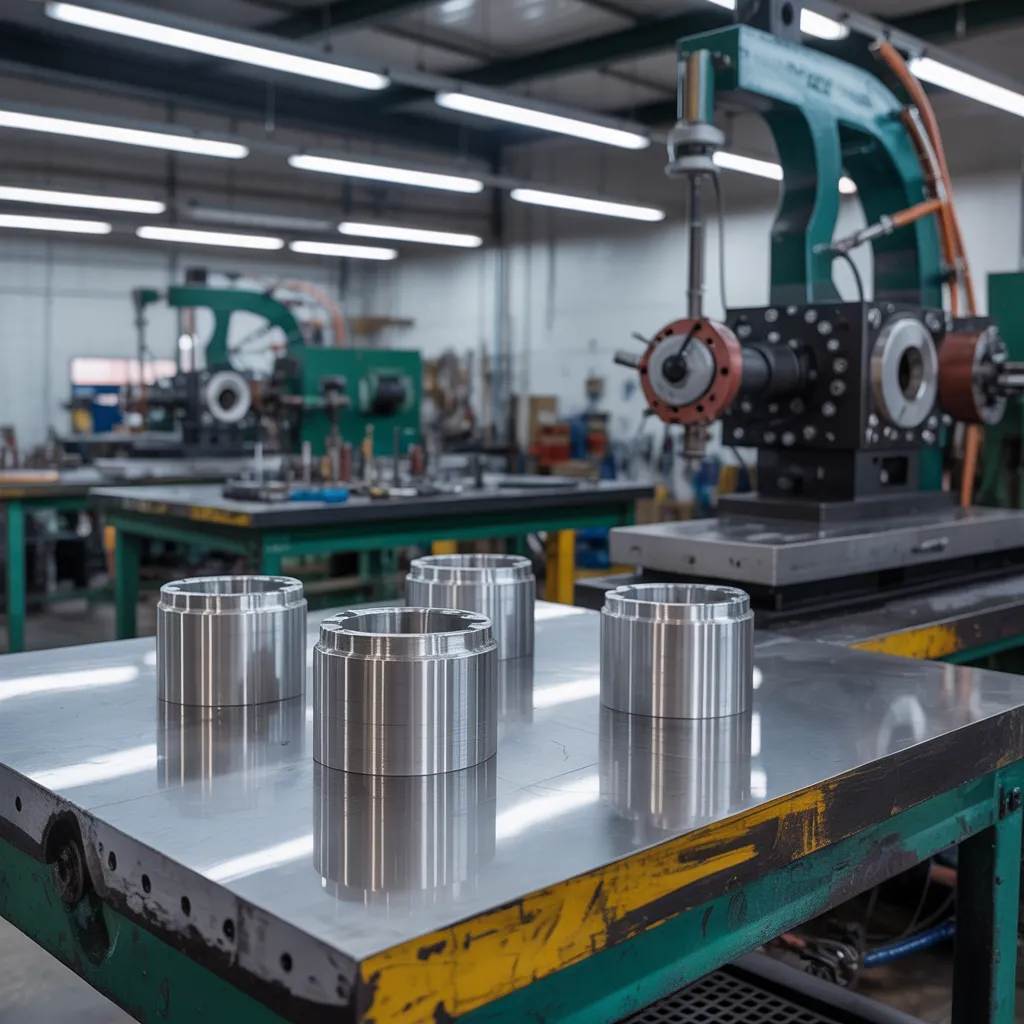
Essential Information About Aluminum Permanent Mold Casting
Even though multiple casting methods exist, aluminum permanent mold casting proves superior for its ability to produce top-quality components with exceptional dimensional accuracy. This approach implements reusable molds, commonly manufactured from metal, which boosts thermal conductivity and facilitates rapid cooling of the molten aluminum. As a result, the process delivers intricate geometries and superior surface finishes versus sand casting or other processes.
Aluminum permanent mold casting is particularly advantageous for manufacturing pieces that need consistency and durability. Its capacity to create parts with tight tolerances makes it perfect for industries including automotive, aerospace, and machinery. The process also reduces waste, as the reusable molds can be used multiple times, making it an environmentally friendly option.
Manufacturing Aluminum Permanent Molds: The Process
Creating aluminum permanent molds demands a meticulous and methodical process that guarantees lasting quality and accuracy. First, a master pattern is fabricated, often using materials like wood or plastic, which serves as the groundwork for the mold design. This pattern is then treated with a release agent to facilitate easy removal of the final mold.
Then, two halves of the mold are manufactured from robust aluminum, ensuring precise tolerances and perfect surface finish. When the halves are prepared, they are assembled, and any required cooling channels are incorporated to manage temperature in the casting process.
The mold then undergoes heat treatment to boost its mechanical properties, prolonging its lifespan. Finally, the completed molds undergo comprehensive quality control assessments to ensure their compliance with industry standards. This meticulous approach ensures that aluminum permanent molds can withstand the demands of repeated casting cycles while maintaining accurate dimensions and surface quality.
Core Benefits of Aluminum Permanent Mold Castings
Permanent mold aluminum castings provide numerous significant benefits that boost their attractiveness in manufacturing. Key advantages encompass improved dimensional precision and an excellent surface finish, which add to the similar resource total quality of the end product. Moreover, the budget-friendly production method establishes these castings as a viable selection for diverse applications.
Advanced Dimension Exactness
Precision in manufacturing is essential, and aluminum permanent mold castings are outstanding at providing enhanced dimensional accuracy. This capability stems from the rigid molds utilized in the casting process, which sustain consistent dimensions throughout production. Aluminum's thermal conductivity also serves a critical function, permitting rapid heat transfer that minimizes dimensional changes during solidification. This means that, parts produced through this method experience limited shrinkage and warping, resulting in tighter tolerances. Additionally, the repeatability of the permanent molds ensures that each casting conforms to the specified measurements, further improving accuracy. This level of precision is especially advantageous for industries requiring exact specifications, resulting in improved performance and reduced rework in manufacturing processes. Hence, aluminum permanent mold castings are recognized for their dimensional integrity.
Outstanding Surface Finish Finish
Visual attractiveness and practical utility merge in the exceptional surface finish of aluminum permanent mold castings. This finish stems from the refined surfaces produced during the casting process, which reduces post-processing requirements. The superior surface quality enhances the visual aspect of components, making them well-suited for applications where appearance is crucial. Additionally, a superior surface finish optimizes the performance characteristics of the cast parts, as it lowers friction and wear during operation. The uniformity of the finish also leads to better adhesion for coatings and paints, delivering longevity and durability. Overall, the outstanding surface finish not only improves the aesthetic quality of aluminum permanent mold castings but also improves their operational efficiency in various industrial applications.
Budget-Friendly Manufacturing Procedure
The economical manufacturing process of aluminum permanent mold castings emerges as a notable advantage for producers. This method reduces material waste by utilizing reusable molds, leading to lower overall production costs. Moreover, the rapid cooling of aluminum in permanent molds allows for shorter cycle times, increasing output efficiency. Cost savings are enhanced by mold durability, which allows them to survive many casting procedures without wearing down. Manufacturers gain advantages through dependable quality and diminished defects, limiting rework needs and scrap amounts. Moreover, producing complicated shapes without substantial machining processes further improves economic efficiency. Overall, aluminum permanent mold castings present an economical solution for producing high-quality components in various industrial applications.
Assessing Aluminum Permanent Mold Castings versus Traditional Processes
Aluminum castings produced through permanent mold processes deliver notable advantages versus traditional methods, especially regarding production speed and surface finish quality. The permanent mold process efficiency enables quicker production cycles, making it ideal for high-volume production. Moreover, aluminum permanent mold castings typically yield superior surface finishes compared to conventional casting approaches.
Manufacturing Speed
Whereas traditional casting methods typically entail prolonged processes and extensive setup times, aluminum permanent mold castings significantly improve production speed. The utilization of permanent molds allows for rapid cycle times, as they can endure high temperatures and rapid cooling rates, enabling faster solidification of aluminum. This efficiency decreases the overall lead time for producing components, making it feasible for manufacturers to meet tight deadlines and boost output. Furthermore, the reusability of permanent molds decreases the need for frequent mold creation, further streamlining the production process. As a result, companies can respond more quickly to market demands, maintaining a competitive edge in industries requiring high-volume production of precision parts. In summary, the speed of production with aluminum permanent mold castings is a substantial advantage.
Quality of Surface Finish
When comparing surface finish quality, aluminum permanent mold castings usually outperform traditional casting methods because of their inherent design and production characteristics. The utilization of durable molds allows for smoother surface finishes, decreasing the need for extensive post-processing. This results in fewer casting defects, such as porosity and surface irregularities, which are more frequent in sand castings. Additionally, the rapid cooling rates associated with permanent molds contribute to finer grain structures, improving the overall surface texture. Thus, parts made through this method show superior dimensional accuracy and aesthetic appeal. Industries that value surface quality, such as automotive and aerospace, increasingly favor aluminum permanent mold castings for their ability to satisfy stringent specifications without compromising production efficiency.
Where Do We Use Aluminum Permanent Mold Castings?
Where might one locate aluminum permanent mold castings in real-world applications? These castings are widely utilized in diverse sectors thanks to their robustness, accuracy, and excellent surface finish. Common applications include automobile components such as engine blocks, transmission cases, and structural parts, where durability and lightweight qualities are crucial. Also, they are utilized in the aerospace industry for components such as brackets and housings, which call for precise tolerances and weight savings.
In the consumer products sector, aluminum permanent mold castings are often found in products including cookware, sporting equipment, and electronic housings. They also hold a crucial position in the manufacturing of industrial machinery parts, including pumps and valves, where performance and reliability are essential. The versatility of aluminum permanent mold castings makes them an indispensable option across various industries, ensuring the production of high-quality, functional parts customized for specific applications.
Fundamental Design Factors for Exact Aluminum Castings
Creating precision aluminum castings necessitates meticulous consideration of numerous key factors to guarantee optimal performance and functionality. One vital aspect is the selection of proper alloy compositions, which influence mechanical properties, corrosion resistance, and thermal conductivity. Designers must also consider the geometry of the components; complex shapes may call for specialized mold designs to minimize defects and assure uniform cooling.
Additionally, wall thickness must be optimized to equilibrate strength and weight, stopping excessive material use while maintaining structural integrity. Surface finish is another important consideration, as it determines both aesthetic appeal and functionality. Proper draft angles need to be incorporated to allow mold release without compromising the castings. Lastly, tolerances need to be defined accurately, as precision in dimensions immediately influences assembly and operational efficiency. By considering these design considerations, manufacturers can manufacture high-quality aluminum castings appropriate for a wide range of industrial applications.
Future Trends in Aluminum Permanent Mold Casting Technology
Major advancements in aluminum permanent mold casting technology are emerging, propelled by the requirement for enhanced efficiency and sustainability in manufacturing processes. Advancements in mold materials, such as the utilization of advanced ceramics and composites, are expected to boost durability and thermal performance. Automation and robotics will play an essential role in streamlining production, lowering labor costs, and boosting precision. Additionally, the integration of artificial intelligence and machine learning will enhance the casting process, permitting real-time monitoring and adjustments to deliver superior quality control.
Eco-friendly methods, like the reprocessing of aluminum scrap and low-energy melting processes, will most likely become industry norm. Moreover, innovations in 3D printing will facilitate rapid prototyping of molds, permitting quicker iterations and personalized designs. On the whole, these trends indicate a significant shift in aluminum permanent mold casting, corresponding to the wider manufacturing industry's goals of operational excellence, sustainability, and innovative technology.
Questions & Answers
Which Industries Benefit Most Significantly From Aluminum Permanent Mold Castings?
Significant benefits are derived by the automotive, aerospace, and machinery industries from aluminum permanent mold castings. These industries leverage the durability, precision, and lightweight characteristics of castings to boost performance and operational efficiency in their diverse products and applications.
Can You Tell If Aluminum Permanent Molds to Be Reused?
Absolutely, aluminum permanent molds can be reused numerous times. Their longevity and ability to withstand wear facilitate many casting cycles, rendering them a economical choice for generating premium components across different manufacturing sectors.
How Does Temperature Influence the Quality of Aluminum Casting?
Temperature substantially affects aluminum casting quality; raised temperatures can boost fluidity, minimizing defects, while excessively high temperatures may cause oxidation and weaken structural integrity. Preserving ideal temperature ensures better dimensional accuracy and surface finish in castings.
What Additional Finishing Processes Are Required After Casting?
Post-casting, supplementary finishing processes may encompass machining, surface treatment, cleaning, deburring, and polishing. These procedures improve dimensional accuracy, refine surface finish, and confirm the final product satisfies specific performance and aesthetic requirements.
Is Aluminum Permanent Mold Casting Sustainable?
Aluminum permanent mold castings are generally considered environmentally responsible because of their ability to be recycled and reduced energy consumption during the manufacturing process. Their long-lasting nature also contributes to reduced waste, promoting sustainable practices in industrial applications.